
The rise of the frame economy
Farcaster is undergoing a structural pivot from a text-based bulletin board to an on-chain application layer. This shift defines the "Frame Economy," where interactive mini-apps embedded directly in social posts replace static casts as the primary unit of engagement. Rather than simply reading about a product or event, users now execute transactions, mint assets, or participate in polls without leaving the feed. This transforms passive scrolling into active economic participation, turning every post into a potential point of sale or utility interface.
Frames are not merely UI enhancements; they are executable smart contracts that bridge social signaling with financial settlement. For creators and developers, this eliminates the friction of redirecting traffic to external websites. For the network, it creates a closed-loop economy where attention directly converts to on-chain activity. The distinction between social media and decentralized applications (dApps) is blurring, as the social graph becomes the distribution channel for financial products.
This model introduces high-stakes considerations for market participants. Because frames operate on-chain, every interaction carries gas costs and smart contract risk. The ease of embedding payments or mints accelerates adoption but also amplifies exposure to rug pulls and protocol vulnerabilities. In 2026, the value of a Farcaster profile is increasingly tied to its ability to drive on-chain volume, not just its follower count. As stablecoins become a global payment rail, frames serve as the critical interface for B2B settlements and micro-transactions, making the social layer a fundamental piece of financial infrastructure.
The Billion-Dollar Reality Check
Farcaster entered 2026 riding a wave of optimistic projections that promised to reshape decentralized social media. Early narratives centered on a potential billion-dollar valuation, fueled by the vision of Dan Romero and Varun Srinivasan, the former Coinbase executives who launched the protocol in 2020. The dream was simple: an open standard where digital identity could move freely between applications, breaking the walled gardens of traditional social platforms. For a time, this vision attracted significant attention from founders and early adopters who saw Farcaster as the next evolution of the open web.
However, the financial landscape has shifted dramatically since those initial pledges. Recent reports indicate that the "billion-dollar dreams" are fading as key founders and core team members have stepped away from the project. According to market analysis, the departure of these influential figures has raised serious questions about the protocol's immediate trajectory and its ability to sustain the high valuation expectations set by early investors. The gap between the ambitious roadmap and the current operational reality has created a palpable sense of uncertainty in the market.
This divergence is not just about personnel changes; it reflects a broader challenge in the decentralized social sector. While the technology remains robust, the commercial viability of building a standalone decentralized social network is proving more difficult than anticipated. The market is now scrutinizing Farcaster's reliance on infrastructure providers rather than just its user growth. The narrative has moved from pure hype to a hard look at sustainable business models in a crypto environment that is increasingly focused on utility and revenue over speculative promise.
The recent developments involving Neynar, a key infrastructure provider for Farcaster, highlight this pivot. Reports of potential mergers or acquisitions between Farcaster and Neynar suggest that the protocol may be seeking consolidation to survive and thrive in a competitive market. This move underscores the reality that decentralized protocols often depend on centralized or semi-centralized entities for stability and growth. Investors are now watching closely to see if such strategic partnerships can bridge the gap between the protocol's technical potential and its financial expectations.
The market's reaction to these developments has been cautious. While the core community of users remains active, the broader investor sentiment is tempered by the lack of clear monetization paths for the protocol itself. Unlike traditional social media giants that generate billions through advertising, Farcaster's open protocol model requires a different approach to value creation. The focus is shifting toward how tools like Frames and decentralized applications can generate revenue, rather than the protocol itself acting as a direct profit center.
As we move deeper into 2026, the question is no longer just whether Farcaster can attract users, but whether it can build a financial ecosystem that supports its long-term survival. The fading of the billion-dollar dream does not mean the end of the protocol, but it does signal a maturation process. The market is learning to value decentralized social networks based on tangible utility and sustainable growth, rather than speculative hype. This shift is critical for the future of the entire decentralized social sector, as it forces founders and investors to confront the hard realities of building in public.
User growth and network effects
Farcaster’s trajectory in 2026 is defined by a shift from speculative volume to sustained engagement. While the platform has not released an exact, audited count of registered users for the current year, historical data provides a clear baseline for its expansion. By late 2024, the network had accumulated approximately 546,494 registered accounts, a significant jump from the 140,000 users added in 2023. This growth reflects a tightening of onboarding friction rather than a broadening of the total addressable market, prioritizing quality of identity over sheer quantity.
The critical metric for the 2026 economy is not registration, but daily active usage. Unlike traditional social platforms where engagement often dilutes as user counts scale, Farcaster’s open protocol structure encourages developers to build specialized clients that retain niche communities. This results in higher per-user interaction rates compared to legacy centralized networks. The network effect here is compounded by the fact that each new user adds value to existing participants through the open graph, rather than competing for a fixed attention pool.
Competitive landscape: Farcaster vs. Bluesky
When evaluating market position, Farcaster’s decentralized architecture offers distinct advantages over competitors like Bluesky in terms of monetization potential and data portability. Bluesky, while growing rapidly, operates on a more centralized server model that limits third-party financial integration. Farcaster’s Frame economy allows for direct social commerce, creating a deeper engagement loop that translates to higher willingness to pay for premium features.
| Feature | Farcaster | Bluesky | Legacy Platforms |
|---|---|---|---|
| Data Ownership | User-controlled via Signers | Provider-controlled | Platform-owned |
| Monetization | Direct (Frames, Casts) | Indirect (Ads, Grants) | Ad-heavy |
| Protocol Openness | Open (Warpcast/Client agnostic) | Partial (AT Protocol) | Closed |
| User Growth (2024) | ~546k registered | ~10M+ MAU | Billions |
This structural difference means that while Bluesky may have higher raw user counts, Farcaster’s users exhibit higher engagement depth. The ability to embed financial instruments and social contracts directly into the feed creates a sticky ecosystem that is difficult for closed platforms to replicate without compromising their ad-revenue models.
Monetization models for creators
The Frame Economy has shifted from experimental prototyping to tangible revenue streams for creators. In 2026, monetization on Farcaster is no longer speculative; it is driven by direct on-chain engagement. Creators are leveraging the protocol’s native capabilities to integrate payments, digital collectibles, and recurring access directly into their social content.
Direct tipping remains the most immediate revenue source. Because Farcaster frames can execute smart contracts, readers can send stablecoins or native tokens to creators with a single click. This frictionless micro-transaction model allows audiences to reward high-quality content instantly. The following widget contextualizes the value of the stablecoins typically used in these transactions.
NFT integrations have evolved beyond static profile pictures. Creators now mint dynamic NFTs that unlock exclusive frames, early access to mini-apps, or membership in private social channels. These digital assets serve as both a collectible and a utility key, creating a hybrid model of ownership and subscription. This approach aligns with the broader 2026 trend where stablecoins act as a global payment rail, enabling seamless cross-border settlements for digital goods.
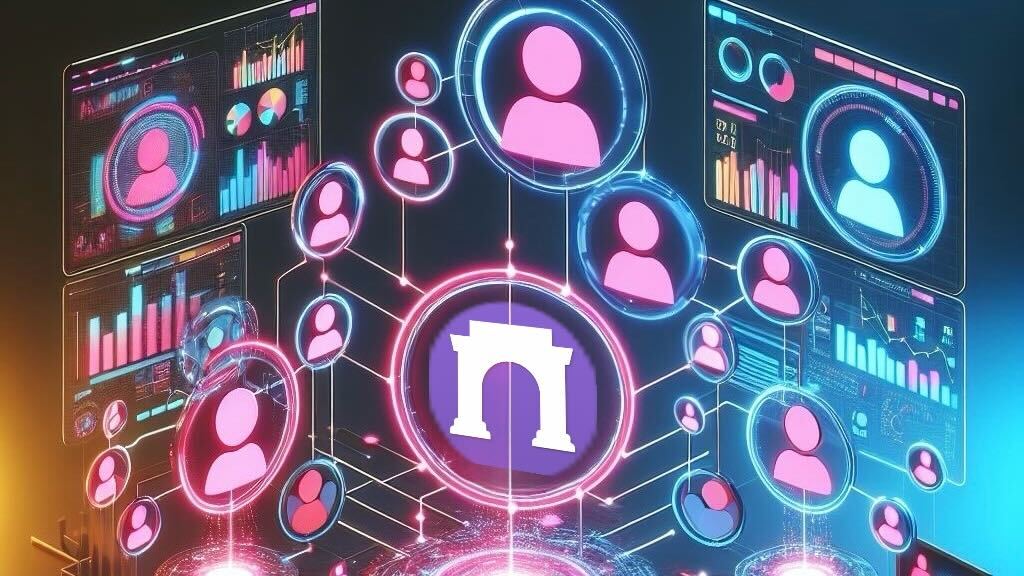
Subscription models are gaining traction through gated frames. Creators can require a small token holding or a recurring payment to access premium content feeds. This shifts the creator-audience relationship from passive consumption to active participation. As the ecosystem matures, these on-chain social engagement tools are becoming the standard for sustainable creator economies in decentralized social networks.
Frequently Asked Questions About Farcaster in 2026
Addressing specific questions about Farcaster’s trajectory, user base, and origins clarifies its position in the 2026 decentralized social landscape.
The protocol’s foundation remains rooted in the expertise of its creators, ensuring that the infrastructure scales efficiently as the user base expands. This background is critical for understanding the network’s technical resilience and long-term viability in a competitive market.
No comments yet. Be the first to share your thoughts!