
Farcaster's $1 Billion Acquisition Marks a Shift in Decentralized Social
In January 2026, the decentralized social landscape underwent a significant consolidation event when Neynar, a leading infrastructure provider for the Farcaster protocol, acquired the core Farcaster project. The transaction, announced on January 21, 2026, reportedly valued the protocol at approximately $1 billion. This acquisition represents a pivotal moment for the ecosystem, transitioning Farcaster from a community-driven open protocol into a commercially backed entity under the stewardship of its own infrastructure layer.
The deal brings together the protocol’s identity layer and Neynar’s developer tools, including Warpcast, the dominant client application. By merging the protocol with its primary infrastructure provider, the acquisition aims to streamline development and secure long-term sustainability. However, the high valuation has drawn scrutiny from market observers who point to the opacity of the deal terms and the ongoing challenges in maintaining user growth amidst a competitive social media environment.
While the $1 billion valuation sets an ambitious financial baseline, the market remains cautious. The integration of Farcaster into Neynar’s operations signals a move toward greater commercial viability, but it also raises questions about the balance between decentralization and centralized control. As the ecosystem adjusts to this new structure, investors and users alike are watching closely to see how the acquisition influences protocol economics and user retention in the months ahead.
Hub Infrastructure Costs and Scalability
The economic model underpinning Farcaster is undergoing a severe stress test as the protocol scales. While the network has successfully mitigated spam through a minimal $5 user deposit, the underlying infrastructure required to store and validate this data is becoming exponentially more expensive. This divergence between user-side friction and node-side costs defines the current market dynamic for the protocol.
Running a Farcaster hub is not a static expense; it is a linear function of network activity. In 2024, the annual cost to operate a single hub was approximately $3,500. By 2025, that figure had climbed to $45,000. The trajectory for 2026 is stark: projected annual costs are expected to reach $575,000 per hub.
This exponential rise in operational expenditure creates a significant barrier to entry for new validators. As costs approach six figures, the pool of individuals or small entities capable of running independent infrastructure shrinks dramatically. This concentration of node ownership risks centralizing the network's governance and data availability layers, contradicting the decentralized ethos that initially attracted developers to the platform.
The financial burden extends beyond simple server fees. It includes storage, bandwidth, and the computational resources required to sync with the growing state of the chain. Without a fundamental shift in how data is archived or compressed, the high cost of entry could stifle the very decentralization that ensures the protocol's resilience. The market must now weigh the value of open access against the sustainability of the underlying infrastructure.
Warpcast drives user engagement through protocol-level incentives
Warpcast has emerged as the dominant entry point for the Farcaster network, effectively functioning as a "sufficiently decentralized" social application that mirrors the familiar mechanics of traditional platforms like X. Users follow accounts, engage with posts, and share content within a unified interface. However, the underlying architecture diverges sharply from legacy social media by integrating on-chain economics directly into the user experience. This convergence of social interaction and financial incentives has created a sticky, high-intent user base that traditional platforms struggle to replicate.
The platform’s growth is underpinned by a deliberate economic design that aligns user behavior with network health. New users must contribute a small initiation fee, typically $5, which serves as a friction point to minimize bot activity and spam. This cost barrier ensures that participants have a tangible stake in the ecosystem’s integrity. In addition, the protocol incentivizes active participation through weekly USDC payouts, rewarding users who drive meaningful engagement. This model transforms passive scrolling into an active, value-generating activity, fostering a community that is both economically and socially invested in the platform's success.
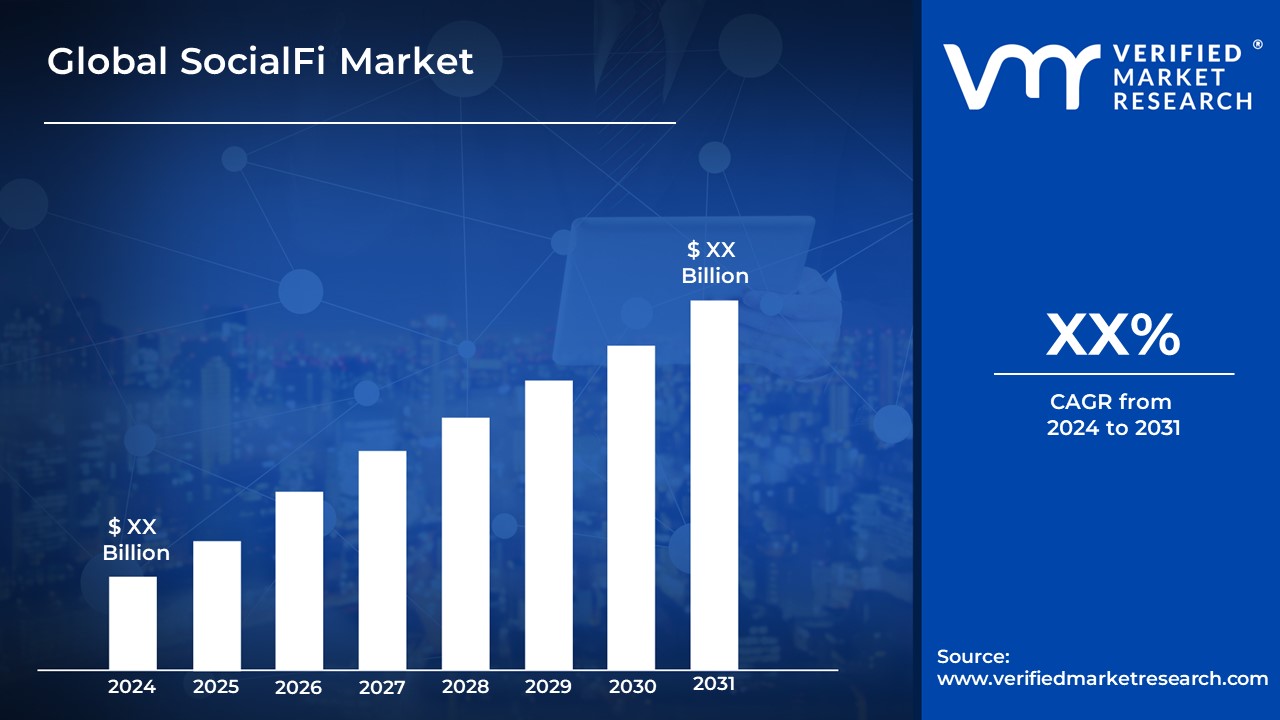
This economic layer introduces a new dynamic to social media valuation, where user attention is directly monetizable. Unlike traditional platforms that extract value through advertising, Farcaster distributes value back to creators and engaged users. This shift is evident in the broader SocialFi market trajectory, which continues to expand as developers build tools that leverage these on-chain incentives. The result is a network effect that is not just social, but financial, creating a robust feedback loop that drives daily active users and sustains long-term protocol economics.
Creator monetization and protocol economics
Farcaster has structurally redefined the cost of entry for social media participation. Unlike traditional platforms that monetize user attention through advertising, Farcaster charges a $5 initiation fee to create an account. This fee serves as a primary anti-spam mechanism, ensuring that bad actors face tangible financial barriers while simultaneously establishing a baseline of user commitment. The capital is held in custody rather than consumed, creating a unique economic loop that prioritizes identity security over immediate platform revenue.
Revenue generation for creators on the network is driven by weekly USDC payouts. These distributions incentivize high-quality engagement and development, effectively turning active participation into a yield-bearing activity. Creators are rewarded for bringing their "A-game," with payouts calculated based on their ability to drive meaningful interaction within the decentralized ecosystem. This model shifts the value proposition from passive content consumption to active community building.
The financial architecture also includes the potential for a future token airdrop. As of late 2025, Farcaster has not launched its native token, but the anticipation of an airdrop has become a significant driver for user acquisition and retention. Early adopters and consistent contributors are positioning themselves to capture value from this anticipated launch, adding a speculative layer to the protocol's economics that distinguishes it from established Web2 social networks.
Monetization model comparison
The following table contrasts Farcaster's economic structure with traditional social media and other decentralized alternatives, highlighting the shift from ad-based revenue to fee-based security and engagement rewards.
| Feature | Farcaster | Traditional Social | Lens Protocol |
|---|---|---|---|
| Entry Cost | $5 one-time fee | Free | Gas fees + NFT |
| Creator Revenue | Weekly USDC payouts | Ad revenue share | Tips + Grants |
| Data Ownership | User-controlled | Platform-controlled | User-controlled |
| Monetization Focus | Engagement & Identity | Attention & Data | Content & Graph |
Technical Analysis: Protocol Viability Indicators
The 2026 outlook for Farcaster presents a stark divergence between capital intensity and user growth. While the protocol has approached a $1 billion valuation, this figure masks the accelerating infrastructure costs required to maintain network integrity. The economic model is shifting from a lean experimental phase to a high-stakes enterprise operation.
The core tension lies in the per-hub annual cost projection, which is estimated to reach $575,000 in 2026. This expense structure is unsustainable for independent operators and centralizes control among well-funded entities. As the cost of running a hub rises, the barrier to entry for new validators increases, potentially reducing the decentralization that originally attracted early adopters.
Conversely, daily active user (DAU) metrics suggest growing engagement, yet the revenue models needed to subsidize these infrastructure costs remain underdeveloped. The protocol’s reliance on minimal user fees, such as the $5 initiation cost, does not scale with the growing complexity of the network. This mismatch creates a fragile economic environment where user growth does not automatically translate to protocol solvency.
For investors and builders, the 2026 landscape is defined by this paradox: high adoption meets prohibitive operational costs. The protocol must either find a way to significantly increase monetization or risk stagnation as the financial burden outweighs the benefits of network expansion. The next phase of Farcaster’s development will likely see consolidation among hub providers and a stricter focus on high-value engagement to justify the rising infrastructure spend.
Key Investor Questions on Farcaster's 2026 Outlook
The Farcaster protocol operates as a decentralized social graph, distinct from traditional Web2 platforms. Users maintain full custody of their identity and data, while the underlying blockchain infrastructure ensures censorship resistance. As the network matures into 2026, the distinction between social engagement and on-chain asset value has become increasingly sharp.
No comments yet. Be the first to share your thoughts!