
Farcaster 2026 budget
Farcaster works best when the purchase path is explicit. Verify the source, compare the offer against real alternatives, check the total cost, and confirm what happens after payment before you decide. After each comparison, write down the one risk that would change your mind. If the seller, condition, support, warranty, shipping, or upkeep still feels uncertain, resolve that question before moving to checkout.
The simplest way to use this section is to verify the seller, compare the total cost, and resolve the biggest risk before you commit.
Compare the best Farcaster tools for 2026
The Farcaster ecosystem has matured significantly by 2026. With Neynar taking over protocol operations, the infrastructure supporting client apps and developer tools has stabilized, giving creators reliable options to build their audiences. Choosing the right client depends on whether you prioritize minimalist text-based interactions or rich media features.
Below is a comparison of the strongest Farcaster clients and tools available this year. Each option serves a different creator workflow, from casual posting to heavy content production.
Warpcast remains the dominant client for most creators due to its polished interface and strong mobile app. It supports rich media embeds, making it ideal for visual storytellers. The Farcaster Mobile app offers a stripped-down experience for users who want quick posting without the clutter of advanced features. Yup is the go-to for creators deeply embedded in the NFT space, allowing seamless integration of on-chain assets into social profiles. For developers and data-driven creators, the Neynar Dashboard provides essential analytics and API access to manage large-scale operations.


As an Amazon Associate, we may earn from qualifying purchases.
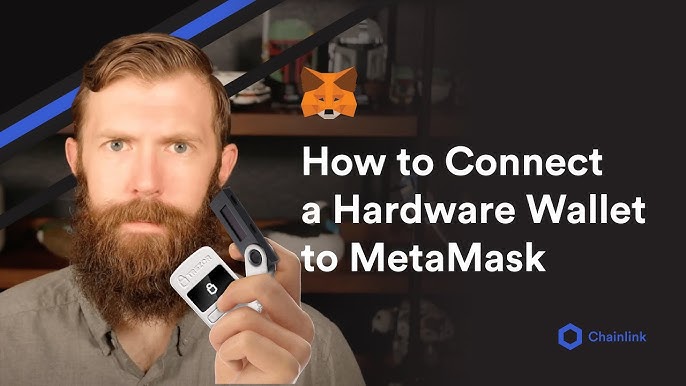
To manage your Farcaster identity securely, a hardware wallet is essential for storing your FID keys. These devices keep your private keys offline, protecting your account from phishing attacks and unauthorized access. Pair this with a reliable mechanical keyboard to enhance your writing workflow, ensuring that your content creation is both efficient and comfortable during long posting sessions.
Farcaster’s open protocol nature means your identity moves with you across apps. Unlike traditional social media, where your audience is locked into a single platform, Farcaster allows you to take your followers and reputation with you as you switch clients or build new tools on top of the protocol.
Inspect the expensive parts
Farcaster is free to join, but the cost of ownership shifts to you. Because the protocol is decentralized, there is no central company absorbing server costs or subsidizing storage. If you treat your digital identity as a permanent asset, you need to understand where the bills come from and where the risks lie.
The primary expense is storage. Farcaster stores data on-chain to ensure resilience. You must pay for this space using the Storage Registry. The current rate is $7 USD per unit for one year, paid in ETH. If you plan to post heavy media like images or videos, you will burn through storage units faster than text-only users. A lightweight text account might cost $7 a year, while a media-heavy profile could double or triple that cost.
Beyond storage, you are responsible for your own security keys. Losing your private key means losing your social graph permanently. There is no password reset. While you can use custodial services like Warpcast for convenience, understanding how to back up your key is a non-negotiable inspection point. If you rely solely on a third-party app, you are trusting their infrastructure more than the protocol itself.
Finally, watch out for hidden data costs. While the protocol is cheap, the apps that access it (clients) often rely on third-party indexers to serve content quickly. Some clients charge subscription fees for faster syncs or ad-free experiences. Compare these client costs against the raw on-chain fees to see your true total cost of ownership.
Estimate your monthly post volume. Text-only posts use minimal storage. If you post images or videos daily, multiply your estimated unit usage by the current $7 annual rate. This is your baseline operational cost.
Check how your chosen client (like Warpcast or Supercast) handles key storage. If it is custodial, ensure you have an exported backup file or seed phrase stored offline. Without this, you have no recovery path if the app changes or shuts down.
List the subscription costs of your preferred Farcaster clients. Some offer free tiers with slower syncs, while premium tiers charge monthly fees for better performance. Add these to your annual storage budget to find your real yearly expense.
Before committing significant social capital, try exporting your data or switching clients. Ensure you can move your identity without losing followers or history. This test reveals which clients offer true portability versus those that lock you in.
Ownership costs
When Neynar acquired Farcaster in January 2026, the protocol shifted from a purely community-run experiment to an infrastructure-backed service. While the core protocol remains open, the financial model for maintaining a presence on the network has evolved. Understanding these costs is essential before committing to the platform, as what appears to be a free social network actually requires ongoing maintenance fees.
Storage and Renewal Fees
Farcaster operates on a "pay-to-play" model where users must rent storage units to keep their data on-chain. These units are managed by the Storage Registry and must be renewed annually. The current cost is approximately $7 USD per unit per year, paid in ETH.
This fee is not a one-time entry cost; it is a recurring subscription. If you fail to renew your storage units, your profile and history become inaccessible, though they are not immediately deleted from the blockchain. For most individual creators, one unit is sufficient, but power users with extensive histories or multiple identities may need to purchase additional units.
Hidden Maintenance Costs
Beyond the direct storage fee, there are indirect costs related to wallet management and security. You must maintain an Ethereum wallet (like MetaMask or Rabby) to pay for these fees. This means you need to hold a small amount of ETH in your wallet at all times to cover gas fees for transactions and the storage rental itself.
Forgetting to renew can lead to a "zombie" profile that is hard to recover. Additionally, if you are building a tool or client that interacts with the protocol, you may face infrastructure costs for running your own nodes or using third-party APIs from providers like Neynar to sync data efficiently.
When Cheap Stops Being Cheap
For casual users, these costs are negligible—often less than the price of a coffee. However, for creators managing multiple identities or businesses, the costs can add up. If you plan to run a marketing campaign or manage a brand account, you need to factor in the recurring $7+ annual fee per identity, plus the time spent managing wallet renewals.
The value proposition shifts from "free social media" to "owned digital identity." You are paying for permanent, portable ownership of your social graph, free from platform bans. If that ownership is worth it to you, the costs are justified. If you are just looking for a free place to post, traditional platforms may still be more convenient.


As an Amazon Associate, we may earn from qualifying purchases.
Farcaster 2026: what to check next
If you are considering building a presence on Farcaster, you likely have practical questions about ownership, security, and costs. Here are the answers to the most common queries for 2026.
Who bought Farcaster?
Farcaster transitioned to new ownership in January 2026 when infrastructure firm Neynar took over protocol operations. Co-founder Dan Romero announced the deal, which reportedly valued the network near $1 billion. Neynar, a longtime builder in the ecosystem, now handles the core infrastructure while the protocol remains open.
Is Farcaster safe and secure?
Farcaster is built on Optimism, a Layer 2 scaling network on Ethereum. This architecture ensures decentralization, security, and transparency by storing identity and data on the blockchain. Because it operates without central servers, it minimizes the risks of censorship and large-scale data breaches common in traditional social platforms.
Does Farcaster cost money?
Yes, using Farcaster requires a small annual fee to maintain your identity. The Storage Registry allows you to rent "units" of storage, currently priced at $7 USD per unit for one year. This fee must be paid in ETH, and the exact amount is determined by an ETH price oracle to reflect current market conditions.
What is Farcaster built on?
Farcaster is built on Ethereum, leveraging its Layer 2 infrastructure to enable fast and low-cost interactions. It allows users to create public social profiles and join communities while maintaining control over their data. This foundation distinguishes it from centralized platforms like Meta or X by placing user identity at the core of the protocol.
No comments yet. Be the first to share your thoughts!