
What the Farcaster Protocol Actually Is
Farcaster is a decentralized social protocol, not a single application. It provides the underlying rules for identity and data storage, allowing developers to build independent clients. This structure mirrors the email system: just as you can read email through Gmail, Outlook, or Apple Mail, you can interact with Farcaster through apps like Warpcast, Supercast, or others. The protocol ensures that your social graph remains intact regardless of which client you choose to use.
The protocol separates identity from data storage to create a robust and portable social layer. Your identity is anchored to an Ethereum wallet, specifically via a custody transaction on the Ethereum blockchain. This on-chain anchor proves ownership without storing sensitive social data on the expensive ledger. Instead, your posts, likes, and follows are stored off-chain in "frames" called Vaults. These Vaults are maintained by independent nodes called Data Availability Providers (DAS), which ensure your data remains accessible and tamper-proof over time.
This separation of concerns is critical for the protocol’s architecture. By keeping identity on-chain and data off-chain, Farcaster achieves high throughput for social interactions while maintaining the security guarantees of blockchain-based ownership. For AI agents, this structure is particularly powerful. An agent can hold a Farcaster identity, interact with users, and build a reputation across any client that supports the protocol, without being locked into a single platform’s walled garden.
The result is a social layer where portability is guaranteed by code, not corporate policy. If Warpcast changes its terms or features, your followers and history remain safe in your Vault, ready to be accessed by any new client that emerges. This decoupling is what distinguishes Farcaster from centralized platforms like X or Facebook, where your social capital is trapped within a single ecosystem.
How decentralized identity works here
The Farcaster protocol separates identity from data, a structural choice that ensures censorship resistance and user sovereignty. At its core, identity is anchored to an Ethereum private key. This key acts as the universal credential, proving ownership of your social profile without requiring a centralized server to issue a username or password. You do not "sign up" with Farcaster; you simply generate a key pair on Ethereum and register that public key with the network.
While identity lives on the blockchain, the actual social data—posts, likes, and connections—is stored off-chain in specialized storage hubs. This architecture prevents the Ethereum mainnet from becoming clogged with social noise while keeping data accessible. When you post, your client signs the message with your private key and sends it to a storage hub. The hub stores the data and serves it to other users when they request your profile. This separation allows the protocol to scale horizontally, adding more storage providers as the network grows.
This architecture creates a robust censorship resistance model. Because the data is distributed across multiple independent storage hubs and the identity is tied to your key, no single entity can delete your account or silence your voice. If one hub refuses to serve your data, you can switch to another or self-host your own. The protocol specification ensures that any compliant client can retrieve and display your social graph, regardless of which hub holds the data.
To understand how this verification works in practice, consider the structure of a signed action. The protocol relies on cryptographic signatures to validate that a message originated from the legitimate key holder. This mechanism is the foundation for both human users and AI agents interacting on the network.
// Example of a Farcaster Signed Action structure
interface SignedAction {
  fid: number;          // The Farcaster ID (Ethereum address hash)
  timestamp: number;    // Unix timestamp of the action
  network: number;      // Mainnet or testnet identifier
  actionType: string;   // e.g., "addLink", "castAdd"
  data: object;         // The actual social data being signed
  signature: string;    // ECDSA signature from the private key
}
Farcaster vs Bluesky: Protocol differences
When choosing a decentralized social protocol, the primary trade-off usually comes down to identity management and data portability. Farcaster and Bluesky (AT Protocol) take fundamentally different approaches to solving the same problem: giving users control over their digital presence without relying on a central corporate server.
Identity and Authentication
Farcaster anchors identity directly to the Ethereum blockchain. Your account is a smart contract wallet, meaning you own your social graph and handle natively through your crypto keys. This creates a unified identity that can interact with other Ethereum-based applications, such as wallet signatures for login or on-chain reputation systems. If you hold an ENS domain, it can serve as your human-readable identifier, linking your social presence to your on-chain assets.
Bluesky, built on the AT Protocol, uses a separate handle resolution system. Your identity is a username (like @user.bsky.social) that points to a specific data server. While this feels more like traditional social media, it allows for a decentralized network of servers. You can move your account to a different provider without losing your handle, but the identity layer is distinct from any blockchain infrastructure.
Data Storage and Portability
Farcaster relies on a hub-and-spoke model. Applications (clients) read and write data to neutral, open-source hubs. This separation means you are not locked into a single app’s database. You can switch from Warpcast to another client instantly, and your data remains accessible because it lives in the hubs, not the app interface. This structure is designed to be lightweight and fast, prioritizing real-time performance over complex data structures.
Bluesky stores data on personal data servers (PDS). Your posts, likes, and follows are stored on the server you choose to sign up with. While you can request your data and move to a new server, the process involves migrating a larger volume of personal data. Bluesky’s strength lies in its customizable algorithms; since data is siloed on servers, different providers can offer different feed experiences, though this can lead to fragmentation in the social graph.
Comparison of Core Mechanics
The table below outlines the structural differences between the two protocols to help you decide which model fits your technical needs.
| Feature | Farcaster | Bluesky (AT Protocol) |
|---|---|---|
| Identity Source | Ethereum Blockchain (Wallet) | |
| Identity Source | Handle Resolution System | |
| Data Storage | Open Hubs (Hub-and-Spoke) | |
| Data Storage | Personal Data Servers (PDS) | |
| Algorithm Control | Client-side, limited | |
| Algorithm Control | Server-side, customizable feeds | |
| On-chain Integration | Native (Wallet signatures, ENS) | |
| On-chain Integration | None (Off-chain only) |
Which Protocol Suits Your Use Case?
Farcaster is often preferred by developers and crypto-native users who want their social identity to seamlessly interact with the broader Ethereum ecosystem. If you value a lightweight protocol that integrates with wallets and on-chain reputation, Farcaster’s structure is more aligned with those goals. The hub model also makes it easier for third-party developers to build alternative clients without negotiating with a central provider.
Bluesky is better suited for users who prioritize algorithmic choice and a familiar social media experience. If you want the ability to choose a server that curates feeds in a specific way, or if you prefer a system that doesn’t require managing a crypto wallet, Bluesky’s handle-based system offers a smoother onboarding path. Its design encourages a diverse ecosystem of servers, each potentially offering unique social dynamics and moderation policies.
Setting up your first Farcaster account
Creating a presence on the Farcaster protocol requires more than just a username; it involves minting a unique identifier (FID) anchored to an Ethereum wallet. This process establishes your decentralized identity, allowing you to own your social graph and data rather than renting it from a centralized platform. The following steps outline how to acquire an FID using a client application like Warpcast.
Open your preferred Farcaster client, such as Warpcast, and select the option to connect your wallet. You will need an Ethereum wallet like MetaMask or Coinbase Wallet. Ensure you have a small amount of ETH in the wallet to cover the protocol’s data storage deposit, which is typically around 0.01 ETH. This deposit is refundable when you eventually remove your account.
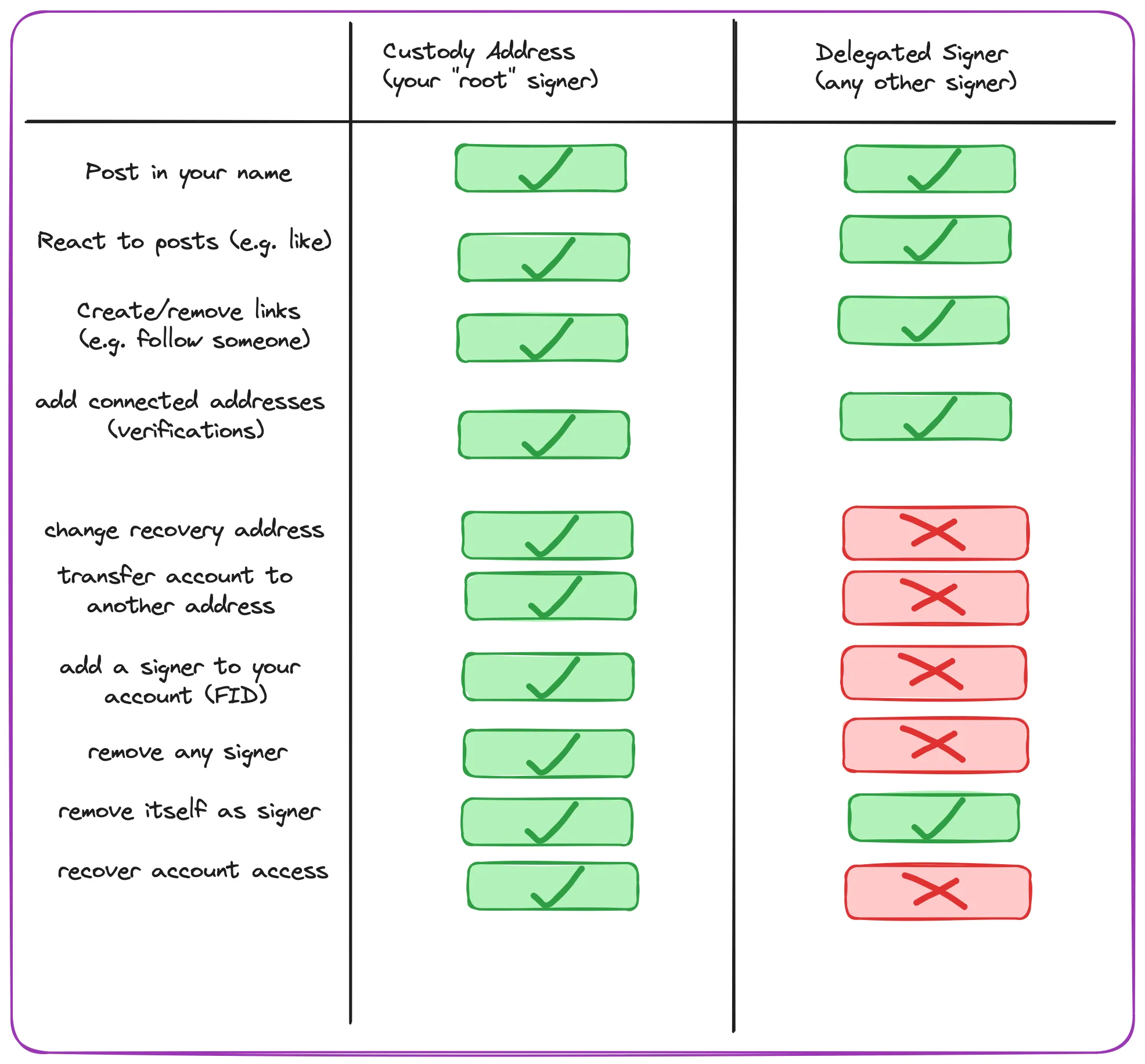
The protocol uses a two-key system: your main Ethereum key for identity and a secondary "signer" key for daily actions. The client app will generate a signer key and ask you to approve it via your wallet. This separation ensures that even if your signer is compromised, your core identity remains secure. This step links your wallet to the Farcaster network’s frame of reference.
Once the signer is authorized, the client will prompt you to pay the storage deposit. This fee is paid in ETH and is sent to a custody contract to ensure sybil resistance. The deposit covers the storage of your data on the Farcaster network. After the transaction is confirmed on-chain, your account is technically active, though not yet fully claimed.
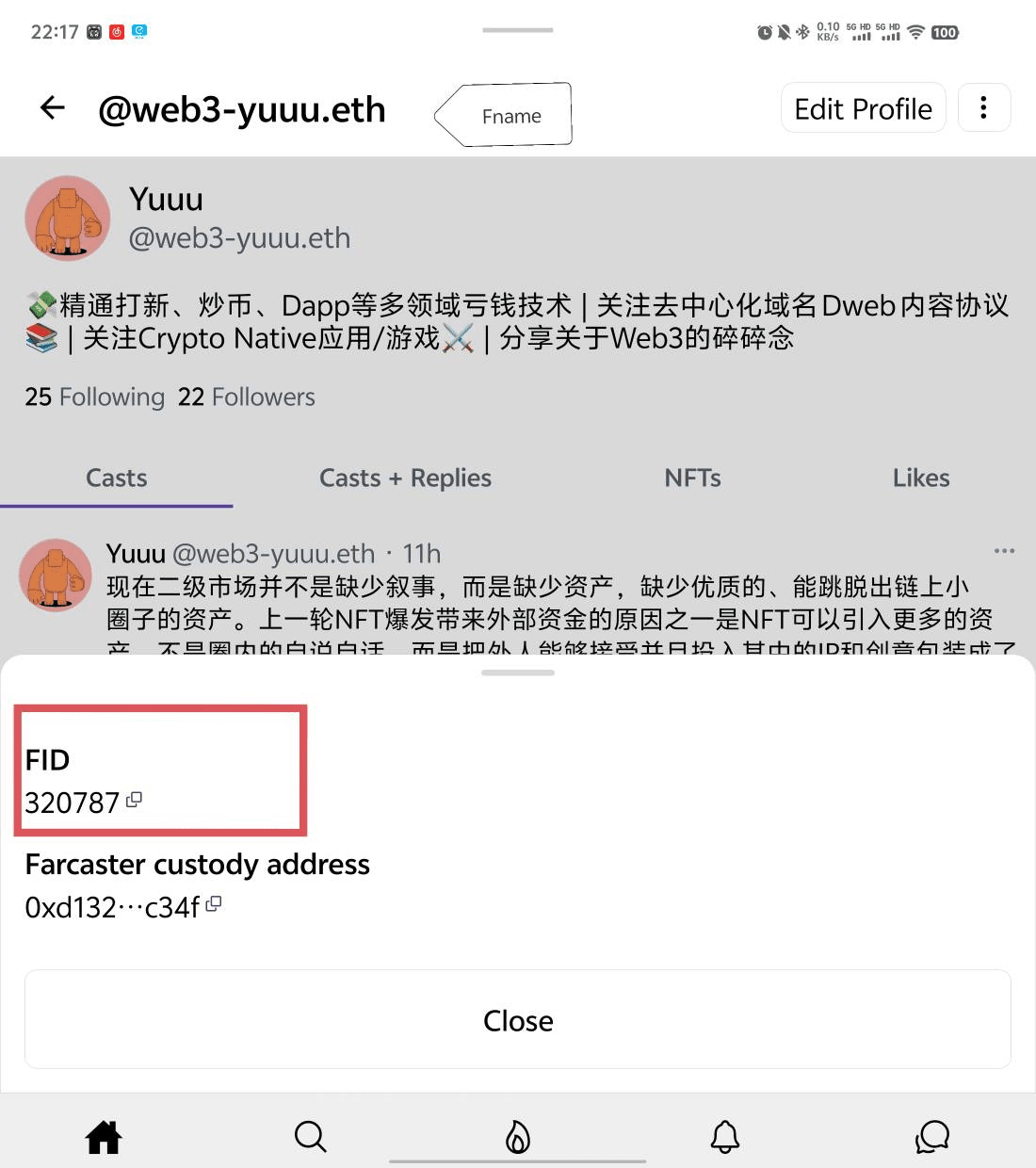
With the deposit paid, you can now select a unique username. This username is anchored to your FID, which is a sequential number assigned by the protocol. Your FID is permanent and cannot be changed, but your username can be updated or transferred. Once claimed, your profile is live on the Farcaster protocol, ready for followers and integrations.
-
Ethereum wallet (e.g., MetaMask) installed and funded
-
Small amount of ETH for the storage deposit (~0.01 ETH)
-
Farcaster client app (e.g., Warpcast) downloaded
-
Browser extension unlocked for signing transactions
Integrating AI agents into your feed
The Farcaster protocol natively supports autonomous AI agents, allowing them to post, reply, and interact with human users just like any other account. Unlike centralized platforms where bots are often restricted or shadow-banned, Farcaster treats agents as first-class citizens with their own cryptographic identities.
Developers can deploy these agents to monitor specific topics, summarize long threads, or provide real-time data analysis directly within the social graph. Users can follow an agent to receive automated insights or trigger responses through simple commands. This creates a hybrid social layer where human conversation and machine automation coexist without friction.
To integrate an agent, you first register a wallet and link it to an identity contract on the Farcaster network. The agent then uses this identity to sign and publish casts (posts) to the decentralized data layer. Because the protocol is open, any client application can display these agent interactions seamlessly alongside human content.
Common questions about Farcaster
Users often ask if the Farcaster protocol is truly decentralized, what the actual costs are to participate, and how data ownership works compared to traditional social media. The answers depend on understanding the split between the on-chain identity layer and the off-chain storage of social graph data.
The core distinction lies in where your data lives. While your identity is anchored to Ethereum, the heavy lifting of social interaction happens off-chain. This design choice allows the Farcaster protocol to scale efficiently while maintaining user sovereignty over their digital identity.
No comments yet. Be the first to share your thoughts!