
The Neynar transition and protocol ownership
In January 2026, Farcaster underwent a significant structural shift when Neynar, the infrastructure firm that had long supported the network, took over full protocol operations. This move addressed growing concerns about the original founders stepping back from daily management. By transferring control to an established backend provider, the network ensured that the underlying infrastructure remained stable and professional.
The transition was not about abandoning the decentralized ethos but rather about separating the application layer from the protocol layer. Neynar’s focus remained on maintaining the reliability of the nodes and data storage, allowing developers and users to build on a solid foundation. This separation mirrors how many legacy platforms operate, where the core technology is managed by a dedicated team while the community drives innovation on top.
Critics had previously worried that the founders’ reduced involvement would leave the protocol in limbo. However, the handover to Neynar provided a clear path forward. The infrastructure team had already been handling much of the heavy lifting, so the transition was more of a formalization than a radical change. This stability has helped maintain user trust and encouraged continued development within the Farcaster ecosystem.
AI agents reshaping content and spam
By 2026, the decentralized social web faces a paradox. The same automation tools that empower creators also flood networks with low-effort noise. Farcaster is not immune to this "sea of junk." Without active intervention, user feeds become indistinguishable from the spam-heavy platforms of the previous decade.
The solution lies in treating AI agents as both the problem and the cure. On one side, bots generate generic posts to game engagement. On the other, sophisticated moderation agents scan for patterns, filtering out spam before it reaches the user. This creates a dynamic where trust is earned through verification, not just volume.
The ecosystem is already shifting toward agent-driven curation. Rather than relying on opaque algorithms, users can subscribe to specific agents that filter content based on their interests. This moves the control from platform owners to individual users.
This balance is fragile. If moderation agents become too aggressive, they may stifle genuine, unconventional voices. If they are too passive, the network drowns in automation. The goal is a feed that feels human, even when AI is doing the heavy lifting behind the scenes.
Native staking and the Farcaster Pro model
Farcaster 2026 shifts from a purely open protocol to a hybrid economic model. The platform introduces native staking to combat spam and a paid tier called Farcaster Pro to sustain infrastructure. This dual approach aims to balance the open nature of decentralized social with the financial reality of running a global network.
At the core of this shift is the staking mechanism. Users can now stake assets to verify their identity and signal trustworthiness. This creates a reputation layer where spam accounts become expensive to maintain, while legitimate users gain visibility through their stake. It is a simple but effective way to filter noise without centralizing control.
Complementing staking is Farcaster Pro, a subscription service available on mobile. Users pay in USDC or warp to access advanced features. The subscription is not just a paywall; it funds the node operators who keep the network running. This model mirrors how many legacy platforms operate, but with transparent on-chain payments.
The table below compares the free tier against the Pro subscription, highlighting the differences in staking requirements and feature access.
| Feature | Free Tier | Farcaster Pro | Staking Role |
|---|---|---|---|
| Account Creation | Minimal | Minimal | Not required |
| Spam Protection | Basic filters | Advanced filtering | High stake = high trust |
| Advanced Analytics | None | Full access | N/A |
| Node Support | Community | Direct funding | Stakers earn fees |
| Payment Method | N/A | USDC or warp | Crypto only |
The gap between valuation and daily activity
The narrative around Farcaster is currently split between boardroom projections and on-chain reality. While recent reports suggest a valuation hovering near $1 billion, the actual number of people using the network tells a different story. According to data pulled from the official client’s API, daily active users sit at approximately 5,000. This figure, often refined by looking at "power badge" holders to filter out spam, represents a tight-knit community rather than a mass-market platform.
This discrepancy highlights a common tension in Web3 social media: the distance between investor confidence and ground-level engagement. For the average user, Farcaster feels like a specialized tool for early adopters and crypto-native developers. The "billion-dollar dream" remains a future possibility, but the current experience is defined by a small, active group of builders and enthusiasts who drive the protocol’s daily rhythm.
The Web3 social landscape
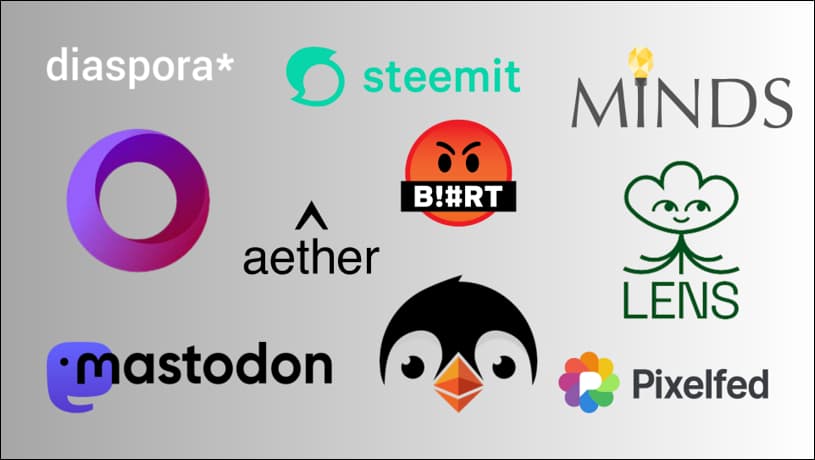
Farcaster is not the only decentralized social protocol on the market. The Web3 social space has expanded significantly, with several platforms offering different approaches to identity and community. While Farcaster emphasizes a decentralized, email-like identity model where users control their accounts, other networks have carved out distinct niches.
Bluesky, built on the AT Protocol, offers a similar decentralized architecture but with a different technical foundation and governance structure. It appeals to users looking for a Twitter-like experience without the centralized control. Status.IM focuses on privacy and security, targeting users who prioritize encrypted messaging and decentralized identity verification over broad social networking.
These alternatives demonstrate that there is no single winner in decentralized social media. Each platform serves a different user need, from open social graphs to secure, private communication. Choosing the right network depends on whether you value open interoperability, privacy, or specific community features.
Frequently Asked Questions About Farcaster in 2026
As the decentralized social landscape shifts, new questions about Farcaster’s structure and usage continue to surface. Here are the most common queries regarding the protocol’s current state.
No comments yet. Be the first to share your thoughts!